











1 / 10 Questions
0 Points

What musical instrument was invented by accident during clock repair?

Piano

Harmonica

Music box

Metronome

Points won
0
Correct score
0%

More Questions

More Articles

Did You Know? 10 Facts About Senate Confirmation Process

Did You Know? 10 Facts About Senate Confirmation Process

⏱️ 6 min read

Did You Know? 10 Facts About Senate Confirmation Process

The Senate confirmation process is one of the most critical constitutional responsibilities granted to the United States Senate. This system of checks and balances ensures that presidential appointments to key positions receive thorough scrutiny before taking office. While many Americans are familiar with the basic concept, the confirmation process contains numerous fascinating aspects that often go unnoticed. Here are ten essential facts about the Senate confirmation process that illuminate how this fundamental component of American governance actually works.

1. Constitutional Foundation Dating Back to 1789

The Senate confirmation process stems directly from Article II, Section 2 of the U.S. Constitution, which grants the President the power to nominate officials "by and with the Advice and Consent of the Senate." The Founding Fathers deliberately created this shared responsibility to prevent any single branch of government from wielding excessive power over federal appointments. This constitutional mandate has remained unchanged for over two centuries, making it one of the most enduring aspects of American governmental structure.

2. Applies to More Than 1,000 Positions

While Supreme Court nominations receive the most media attention, the Senate confirmation process actually covers approximately 1,200 positions across the federal government. These include cabinet secretaries, federal judges, ambassadors, military officers at the highest ranks, and heads of major federal agencies. The sheer volume of positions requiring Senate approval demonstrates the extensive scope of this constitutional duty and the significant workload it creates for senators and their staff members.

3. Committee Hearings Serve as the First Major Hurdle

Before reaching the full Senate floor, nominees must first pass through the relevant committee with jurisdiction over their prospective position. For instance, Supreme Court nominees appear before the Senate Judiciary Committee, while cabinet-level officials testify before committees related to their departments. These committee hearings allow for detailed questioning and investigation of a nominee's qualifications, experience, and potential conflicts of interest. A committee can recommend approval, rejection, or send the nomination forward without recommendation.

4. The Majority Vote Threshold Has Changed

For most of American history, Senate rules required 60 votes to overcome a filibuster and advance most nominations. However, this changed through a series of rule modifications commonly called the "nuclear option." In 2013, the Senate eliminated the 60-vote threshold for most executive branch nominees and lower court judges. In 2017, this change extended to Supreme Court nominees. Today, most confirmations require only a simple majority of senators present and voting, fundamentally altering the confirmation landscape and reducing minority party influence.

5. Background Investigations Are Exhaustive

Before Senate hearings even begin, nominees undergo extensive FBI background checks that examine their personal history, financial records, potential conflicts of interest, and past conduct. For high-level positions, these investigations can take months and involve interviews with dozens or even hundreds of individuals who have interacted with the nominee professionally and personally. The FBI compiles this information into detailed reports that senators review before making their decisions, though the depth of these investigations can vary based on the position's sensitivity.

6. Blue Slip Tradition Affects Judicial Nominations

An interesting senatorial courtesy known as the "blue slip" tradition has historically played a role in federal judicial nominations. Under this practice, home-state senators receive blue-colored forms to register their approval or disapproval of judicial nominees from their states. While not a formal rule, chairs of the Senate Judiciary Committee have traditionally honored negative blue slips by refusing to proceed with nominees who lack home-state senator support. However, the weight given to blue slips has varied significantly depending on which party controls the Senate.

7. Confirmation Timelines Vary Dramatically

The duration of the confirmation process can range from mere weeks to over a year, depending on various factors including the position's importance, the nominee's controversy level, and the political climate. Some nominees receive swift approval with minimal opposition, while others face prolonged battles involving multiple hearings, extensive document requests, and political maneuvering. During periods of divided government, when different parties control the White House and Senate, confirmation processes typically take considerably longer.

8. Recess Appointments Provide a Temporary Workaround

The Constitution grants presidents the power to make recess appointments when the Senate is not in session, allowing nominees to serve temporarily without Senate confirmation. These appointments expire at the end of the Senate's next session unless the Senate confirms the individual. To prevent recess appointments, the Senate now frequently holds pro forma sessions every few days, even during traditional recess periods. A 2014 Supreme Court ruling limited the president's recess appointment power by defining when the Senate is actually in recess.

9. Nominees Can Withdraw or Be Withdrawn

Not all nominations result in confirmation votes. Presidents sometimes withdraw nominations when it becomes clear that a nominee lacks sufficient support for confirmation. Similarly, nominees themselves may withdraw when facing intense scrutiny, damaging revelations, or personal considerations. Throughout history, hundreds of nominations have been withdrawn before coming to a vote, representing a significant but often overlooked aspect of the confirmation process. These withdrawals can occur at any stage, from immediately after announcement to just before the final vote.

10. Rejected Nominees Are Relatively Rare

Despite contentious confirmation battles that dominate headlines, the Senate actually rejects very few nominees outright. Since 1789, the Senate has formally rejected only a small percentage of nominations through direct votes. Many presidents choose to withdraw problematic nominations rather than face public rejection. For Supreme Court nominees specifically, only 12 have been formally rejected by Senate vote in American history. The rarity of outright rejection reflects the political calculation involved in the nomination process and the tendency of administrations to gauge Senate sentiment before proceeding with controversial choices.

Conclusion

The Senate confirmation process represents a cornerstone of American constitutional governance, balancing presidential authority with legislative oversight. These ten facts reveal the complexity, historical evolution, and practical realities of how the United States vets individuals for its most important governmental positions. From its constitutional origins to modern procedural changes, from committee scrutiny to final floor votes, the confirmation process continues to shape American government and policy. Understanding these aspects provides valuable insight into how our democratic institutions function and the ongoing dialogue between the executive and legislative branches that defines much of our political system.
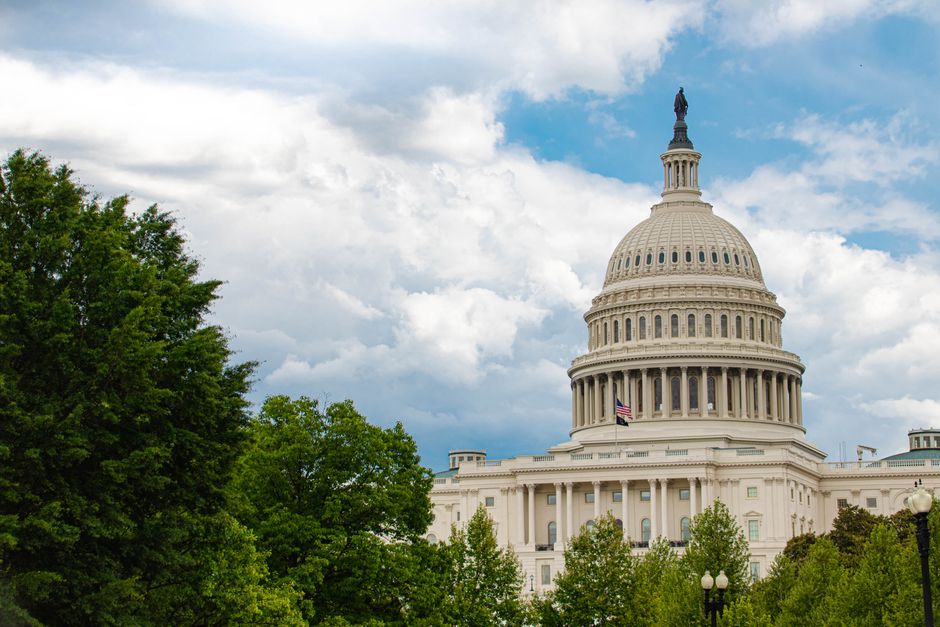
Did You Know? 10 Facts About Congressional Pension System

Did You Know? 10 Facts About Congressional Pension System

⏱️ 6 min read

Did You Know? 10 Facts About Congressional Pension System

The Congressional pension system has long been a subject of public interest and scrutiny. Many Americans wonder about the retirement benefits their elected representatives receive after serving in the United States Congress. While some myths and misconceptions surround this topic, understanding the actual facts about how congressional pensions work provides valuable insight into one aspect of legislative compensation. This article explores ten important facts about the Congressional pension system that every citizen should know.

1. Members of Congress Participate in the Federal Employees Retirement System (FERS)

Congressional members do not have a separate, exclusive pension system. Since 1984, newly elected members of Congress have been enrolled in the Federal Employees Retirement System (FERS), the same retirement program available to all federal civilian employees. Prior to 1984, members participated in the Civil Service Retirement System (CSRS), but this was phased out. This means that congressional retirement benefits are structured similarly to those of other federal workers, though the benefit calculations may differ based on service and salary levels.

2. A Minimum of Five Years of Service is Required

Members of Congress must serve at least five years to become vested in the pension system and eligible to receive retirement benefits. This requirement ensures that only those who have dedicated a significant period to congressional service receive pension benefits. Those who serve fewer than five years forfeit their pension eligibility, though they may still receive their personal contributions back. This threshold prevents short-term representatives from accessing long-term retirement benefits funded by taxpayers.

3. Members Contribute to Their Own Pensions

Congressional members are required to contribute a portion of their salary toward their pension benefits. Currently, members contribute 1.3 percent of their full salary to the FERS basic benefit and an additional percentage to Social Security. These mandatory contributions come directly from their paychecks, meaning that congressional pensions are not entirely funded by taxpayers. Members essentially invest in their own retirement through automatic payroll deductions throughout their years of service.

4. The Pension Amount Depends on Years of Service and Salary

The pension benefit calculation is based on a formula that considers the member's years of creditable service and their highest three consecutive years of salary, known as the "high-3 average." The basic formula multiplies years of service by the high-3 average salary and by an accrual rate. For members of Congress, this accrual rate is 1.7 percent for the first 20 years of service and 1.0 percent for additional years beyond that. This structure means that longer-serving members receive proportionally higher pension benefits than those who serve shorter terms.

5. There is a Maximum Pension Limit

Congressional pensions are capped at 80 percent of a member's final salary, regardless of how many years they serve. This maximum benefit limit ensures that even the longest-serving members cannot receive pension benefits that exceed their working salary. The cap represents a ceiling on retirement benefits and requires exceptionally long service to achieve. Most members retire with pension benefits considerably lower than this maximum threshold.

6. Retirement Age Affects Benefit Eligibility

The age at which a member of Congress can begin collecting pension benefits varies based on their years of service and age at retirement. Members who are at least 62 years old with five years of service, 50 years old with 20 years of service, or have reached 25 years of service at any age can receive immediate retirement benefits. Those who leave Congress before meeting these criteria may still receive deferred benefits beginning at age 62, provided they have at least five years of creditable service. Early retirement options exist but may result in reduced benefit amounts.

7. Congressional Pensions Include Cost-of-Living Adjustments

Like other federal pensions under FERS, congressional retirement benefits receive annual cost-of-living adjustments (COLAs) to help maintain purchasing power against inflation. These adjustments are tied to changes in the Consumer Price Index and help ensure that retirees' benefits keep pace with rising living costs over time. However, the COLA formula for FERS pensions may differ from Social Security adjustments, and the actual percentage increase can vary from year to year based on economic conditions.

8. Members Also Receive Social Security Benefits

In addition to their congressional pensions, members of Congress are covered by Social Security and pay into the system just like other American workers. This means they are eligible to receive Social Security retirement benefits based on their lifetime earnings, including their congressional salary and any other covered employment. Congressional members therefore have a two-part retirement system: their FERS pension and Social Security benefits. Both components work together to provide retirement income security.

9. The Thrift Savings Plan Provides Additional Retirement Savings

Members of Congress have access to the Thrift Savings Plan (TSP), a defined contribution retirement savings plan similar to a 401(k) in the private sector. The federal government provides matching contributions up to five percent of salary for members who participate. This voluntary program allows congressional members to supplement their pension and Social Security benefits with additional tax-advantaged retirement savings. Many members take advantage of this option to build more substantial retirement resources.

10. Convicted Felons Can Lose Their Congressional Pensions

Federal law stipulates that members of Congress who are convicted of certain felonies related to their official duties may forfeit their pension benefits. Offenses that can trigger pension forfeiture include corruption, bribery, perjury, and other crimes committed while holding office. This provision serves as an accountability measure, ensuring that members who betray the public trust do not continue receiving taxpayer-funded retirement benefits. The forfeiture applies to both the FERS pension and, in some cases, the TSP account balance attributable to government contributions.

Conclusion

Understanding the Congressional pension system reveals that it operates within the broader federal employee retirement framework rather than as a privileged separate system. These ten facts demonstrate that congressional pensions require contributions from members, depend on years of service and salary, have maximum limits, and include accountability provisions for misconduct. While members of Congress do receive retirement benefits for their service, these benefits follow established rules and formulas similar to those governing other federal employees. Public awareness of how the system actually works helps foster informed discussions about congressional compensation and retirement policy.