











1 / 10 Questions
0 Points

What Federal Agency Protects The President?

Secret Service

CIA

US Marshals

FBI

Points won
0
Correct score
0%

More Questions

More Articles

Did You Know? 10 Facts About Senate Confirmation Process

Did You Know? 10 Facts About Senate Confirmation Process

⏱️ 6 min read

Did You Know? 10 Facts About Senate Confirmation Process

The Senate confirmation process is one of the most critical constitutional responsibilities granted to the United States Senate. This system of checks and balances ensures that presidential appointments to key positions receive thorough scrutiny before taking office. While many Americans are familiar with the basic concept, the confirmation process contains numerous fascinating aspects that often go unnoticed. Here are ten essential facts about the Senate confirmation process that illuminate how this fundamental component of American governance actually works.

1. Constitutional Foundation Dating Back to 1789

The Senate confirmation process stems directly from Article II, Section 2 of the U.S. Constitution, which grants the President the power to nominate officials "by and with the Advice and Consent of the Senate." The Founding Fathers deliberately created this shared responsibility to prevent any single branch of government from wielding excessive power over federal appointments. This constitutional mandate has remained unchanged for over two centuries, making it one of the most enduring aspects of American governmental structure.

2. Applies to More Than 1,000 Positions

While Supreme Court nominations receive the most media attention, the Senate confirmation process actually covers approximately 1,200 positions across the federal government. These include cabinet secretaries, federal judges, ambassadors, military officers at the highest ranks, and heads of major federal agencies. The sheer volume of positions requiring Senate approval demonstrates the extensive scope of this constitutional duty and the significant workload it creates for senators and their staff members.

3. Committee Hearings Serve as the First Major Hurdle

Before reaching the full Senate floor, nominees must first pass through the relevant committee with jurisdiction over their prospective position. For instance, Supreme Court nominees appear before the Senate Judiciary Committee, while cabinet-level officials testify before committees related to their departments. These committee hearings allow for detailed questioning and investigation of a nominee's qualifications, experience, and potential conflicts of interest. A committee can recommend approval, rejection, or send the nomination forward without recommendation.

4. The Majority Vote Threshold Has Changed

For most of American history, Senate rules required 60 votes to overcome a filibuster and advance most nominations. However, this changed through a series of rule modifications commonly called the "nuclear option." In 2013, the Senate eliminated the 60-vote threshold for most executive branch nominees and lower court judges. In 2017, this change extended to Supreme Court nominees. Today, most confirmations require only a simple majority of senators present and voting, fundamentally altering the confirmation landscape and reducing minority party influence.

5. Background Investigations Are Exhaustive

Before Senate hearings even begin, nominees undergo extensive FBI background checks that examine their personal history, financial records, potential conflicts of interest, and past conduct. For high-level positions, these investigations can take months and involve interviews with dozens or even hundreds of individuals who have interacted with the nominee professionally and personally. The FBI compiles this information into detailed reports that senators review before making their decisions, though the depth of these investigations can vary based on the position's sensitivity.

6. Blue Slip Tradition Affects Judicial Nominations

An interesting senatorial courtesy known as the "blue slip" tradition has historically played a role in federal judicial nominations. Under this practice, home-state senators receive blue-colored forms to register their approval or disapproval of judicial nominees from their states. While not a formal rule, chairs of the Senate Judiciary Committee have traditionally honored negative blue slips by refusing to proceed with nominees who lack home-state senator support. However, the weight given to blue slips has varied significantly depending on which party controls the Senate.

7. Confirmation Timelines Vary Dramatically

The duration of the confirmation process can range from mere weeks to over a year, depending on various factors including the position's importance, the nominee's controversy level, and the political climate. Some nominees receive swift approval with minimal opposition, while others face prolonged battles involving multiple hearings, extensive document requests, and political maneuvering. During periods of divided government, when different parties control the White House and Senate, confirmation processes typically take considerably longer.

8. Recess Appointments Provide a Temporary Workaround

The Constitution grants presidents the power to make recess appointments when the Senate is not in session, allowing nominees to serve temporarily without Senate confirmation. These appointments expire at the end of the Senate's next session unless the Senate confirms the individual. To prevent recess appointments, the Senate now frequently holds pro forma sessions every few days, even during traditional recess periods. A 2014 Supreme Court ruling limited the president's recess appointment power by defining when the Senate is actually in recess.

9. Nominees Can Withdraw or Be Withdrawn

Not all nominations result in confirmation votes. Presidents sometimes withdraw nominations when it becomes clear that a nominee lacks sufficient support for confirmation. Similarly, nominees themselves may withdraw when facing intense scrutiny, damaging revelations, or personal considerations. Throughout history, hundreds of nominations have been withdrawn before coming to a vote, representing a significant but often overlooked aspect of the confirmation process. These withdrawals can occur at any stage, from immediately after announcement to just before the final vote.

10. Rejected Nominees Are Relatively Rare

Despite contentious confirmation battles that dominate headlines, the Senate actually rejects very few nominees outright. Since 1789, the Senate has formally rejected only a small percentage of nominations through direct votes. Many presidents choose to withdraw problematic nominations rather than face public rejection. For Supreme Court nominees specifically, only 12 have been formally rejected by Senate vote in American history. The rarity of outright rejection reflects the political calculation involved in the nomination process and the tendency of administrations to gauge Senate sentiment before proceeding with controversial choices.

Conclusion

The Senate confirmation process represents a cornerstone of American constitutional governance, balancing presidential authority with legislative oversight. These ten facts reveal the complexity, historical evolution, and practical realities of how the United States vets individuals for its most important governmental positions. From its constitutional origins to modern procedural changes, from committee scrutiny to final floor votes, the confirmation process continues to shape American government and policy. Understanding these aspects provides valuable insight into how our democratic institutions function and the ongoing dialogue between the executive and legislative branches that defines much of our political system.
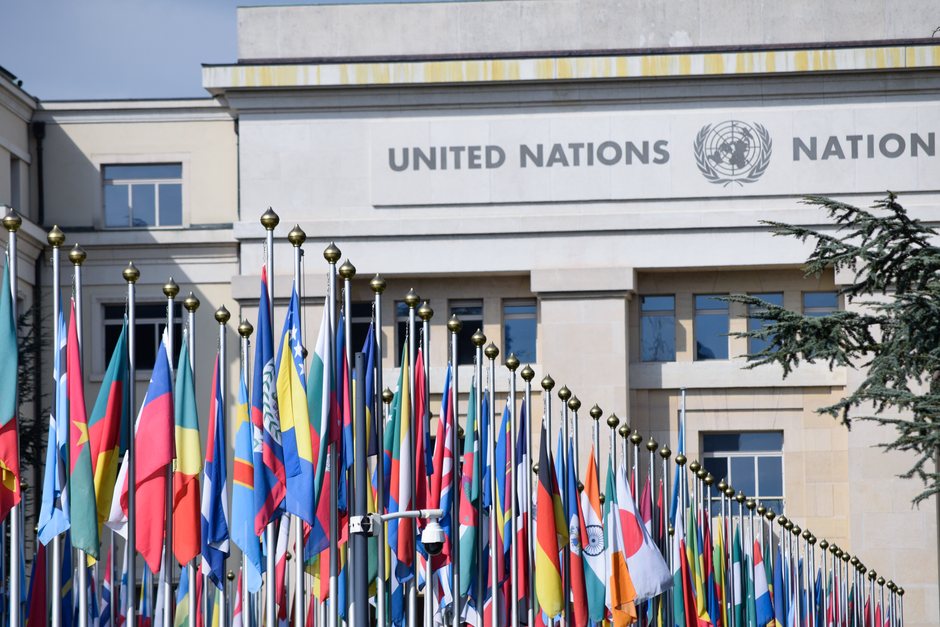
How Migration Policy Intersects with Diplomatic Relations

How Migration Policy Intersects with Diplomatic Relations

⏱️ 5 min read

How Migration Policy Intersects with Diplomatic Relations

Migration policy has emerged as one of the most complex and consequential issues in contemporary international relations. The movement of people across borders—whether driven by economic opportunity, conflict, climate change, or persecution—fundamentally shapes diplomatic relationships between nations. As global migration flows continue to increase, the intersection between migration policy and diplomatic relations has become increasingly intricate, requiring careful navigation by foreign policy practitioners and demanding cooperation between states with often divergent interests.

The Foundational Connection Between Migration and Diplomacy

Migration policy and diplomatic relations are inherently interconnected because migration is, by definition, a transnational phenomenon. No country can manage migration entirely independently; policies enacted by one nation inevitably affect others. When a country tightens its borders, neighboring nations may experience increased pressure. When a state accepts large numbers of refugees, it may gain international goodwill or face domestic political backlash that affects its foreign policy positions.

This interconnection creates both opportunities and challenges for diplomatic engagement. Migration can serve as a platform for bilateral and multilateral cooperation, fostering dialogue and partnership. Conversely, disagreements over migration policy can strain even longstanding alliances and create diplomatic tensions that spill over into other areas of international relations.

Bilateral Agreements and Migration Corridors

One of the most direct ways migration policy intersects with diplomatic relations is through bilateral agreements between countries. These agreements often address specific migration challenges or opportunities between two nations and can significantly influence the broader diplomatic relationship.

Labor Migration Agreements

Many countries have established formal agreements to facilitate labor migration, recognizing mutual economic benefits. These arrangements allow receiving countries to address labor shortages while providing sending countries with remittance income and potential skill development for their citizens. The diplomatic goodwill generated by such agreements often extends beyond migration issues, creating positive momentum in trade negotiations, security cooperation, and cultural exchanges.

Readmission and Return Agreements

Conversely, readmission agreements—which establish terms for returning migrants to their countries of origin or transit—can create diplomatic friction. Countries of origin may resist accepting returnees, particularly when they fear domestic political repercussions or lack resources to reintegrate them. Receiving countries, meanwhile, may leverage development aid, trade preferences, or visa facilitation as incentives for cooperation, demonstrating how migration policy becomes entangled with broader diplomatic and economic considerations.

Regional Cooperation Frameworks

Beyond bilateral relationships, migration policy increasingly operates within regional frameworks that shape diplomatic dynamics across multiple countries simultaneously.

The European Context

The European Union provides perhaps the most developed example of how migration policy affects regional diplomacy. Internal disagreements over burden-sharing for asylum seekers have created significant tensions among member states, with countries on the external borders arguing they bear disproportionate responsibility. These disputes have strained relationships within the EU and affected the bloc's ability to present a unified front on other foreign policy matters.

The EU's external migration diplomacy—including partnerships with North African countries to prevent irregular migration—illustrates how migration concerns shape relationships with third countries. These partnerships often involve substantial financial assistance and development cooperation, demonstrating the high diplomatic priority placed on migration management.

Other Regional Approaches

Similar dynamics play out in other regions. The Association of Southeast Asian Nations (ASEAN) has grappled with migration challenges related to both labor migration and refugee flows. African regional organizations have developed frameworks for free movement while simultaneously addressing irregular migration and displacement. In the Americas, migration from Central America northward has become a central diplomatic issue affecting relationships among multiple countries.

Refugee Protection and International Obligations

The international refugee protection system, anchored in the 1951 Refugee Convention and its 1967 Protocol, creates legal obligations that intersect with diplomatic relations in complex ways. Countries that maintain robust asylum systems may find themselves in diplomatic disputes with countries of origin that resist being identified as sources of persecution or instability.

Furthermore, the principle of burden-sharing for refugee protection remains contentious. Countries hosting large refugee populations—often developing nations neighboring conflict zones—may seek increased international support and recognition for their contributions. Their diplomatic relationships with wealthier nations that host fewer refugees but provide financial assistance involve delicate negotiations over responsibility and solidarity.

Migration as a Foreign Policy Tool

Some states have weaponized migration as a tool of foreign policy, deliberately creating or manipulating migration flows to achieve diplomatic objectives. This practice involves facilitating or threatening to facilitate irregular migration toward other countries as a form of pressure or coercion.

Such tactics can severely damage diplomatic relations and create security concerns for targeted countries. They also complicate international cooperation on migration management, as trust between nations becomes strained and the humanitarian needs of migrants become secondary to geopolitical maneuvering.

Visa Policy and Diplomatic Signaling

Visa policies serve as both practical migration management tools and diplomatic signals. Visa liberalization agreements represent diplomatic progress and strengthened relationships, facilitating tourism, business, and people-to-people connections. Conversely, imposing or maintaining visa requirements can signal diplomatic distance or security concerns.

Visa restrictions can also serve as diplomatic sanctions, limiting the movement of government officials or entire populations as a response to political disagreements. These restrictions, while targeted at governments, affect ordinary citizens and can generate resentment that complicates diplomatic relations.

Conclusion

The intersection of migration policy and diplomatic relations represents one of the most challenging areas of contemporary foreign policy. As global migration continues to evolve in response to economic disparities, climate change, conflicts, and demographic shifts, this intersection will only become more significant. Effective diplomacy requires recognizing that migration policy decisions reverberate across borders and that sustainable approaches demand international cooperation, mutual respect for sovereignty, and attention to both humanitarian principles and legitimate national interests. Countries that successfully navigate these challenges position themselves as constructive international actors, while those that fail risk diplomatic isolation and exacerbated migration challenges.