
⏱️ 5 min read
What Quantum Physics Suggests About Reality
Quantum physics has revolutionized our understanding of the universe, challenging fundamental assumptions about the nature of reality itself. Since its development in the early 20th century, quantum mechanics has not only transformed scientific understanding but has also permeated popular culture, inspiring countless films, books, and philosophical discussions. What this field of physics suggests about reality is both fascinating and deeply counterintuitive, forcing us to reconsider what it means for something to exist.
The Fundamental Weirdness of the Quantum World
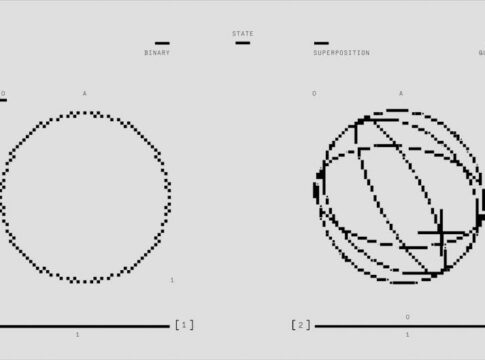
At the quantum level, the universe operates according to rules that seem to defy common sense. Unlike the predictable, deterministic world described by classical physics, quantum mechanics reveals a reality that is fundamentally probabilistic. Particles do not have definite positions or velocities until they are measured; instead, they exist in a state of superposition, occupying multiple states simultaneously until observation collapses these possibilities into a single outcome.
This strange behavior was famously illustrated by Erwin Schrödinger’s thought experiment involving a cat in a box. According to quantum mechanics, until the box is opened and observed, the cat exists in a superposition of being both alive and dead simultaneously. While this scenario was intended to highlight the absurdity of applying quantum rules to everyday objects, it effectively demonstrates the bizarre implications of quantum theory for our understanding of reality.
The Observer Effect and the Role of Consciousness
One of the most profound implications of quantum physics is the observer effect, demonstrated most clearly in the famous double-slit experiment. When particles such as electrons are fired at a barrier with two slits, they create an interference pattern on a screen behind the barrier, suggesting they behave as waves passing through both slits simultaneously. However, when scientists attempt to observe which slit the particle passes through, the interference pattern disappears, and the particles behave like discrete objects passing through one slit or the other.
This phenomenon has led to intense debate about the role of observation and consciousness in shaping reality. Some interpretations suggest that the act of measurement or observation literally brings reality into existence, transforming quantum possibilities into concrete outcomes. While this doesn’t necessarily mean human consciousness creates reality, it does suggest that reality at the quantum level is intimately connected with the act of observation in ways that classical physics never anticipated.
Multiple Interpretations of Quantum Reality
The scientific community has developed several interpretations to explain what quantum mechanics tells us about reality, each with profound philosophical implications:
The Copenhagen Interpretation
The most widely taught interpretation, developed primarily by Niels Bohr and Werner Heisenberg, suggests that quantum particles exist in superposition until measured. The act of measurement causes the wave function to collapse, selecting one outcome from many possibilities. This interpretation implies that reality at the quantum level is fundamentally indeterminate until observation occurs.
The Many-Worlds Interpretation
Proposed by Hugh Everett III in 1957, this interpretation suggests that all possible outcomes of quantum measurements actually occur, but in separate, branching universes. Rather than wave function collapse, the universe splits into multiple versions of itself with each quantum event. This means that every possible version of history exists in parallel realities, a concept that has captured popular imagination and inspired numerous science fiction narratives.
Pilot Wave Theory
Also known as de Broglie-Bohm theory, this interpretation proposes that particles have definite positions at all times, guided by a quantum wave. This deterministic approach eliminates some of the mystical elements of other interpretations but introduces non-locality, where influences can act instantaneously across vast distances.
Quantum Entanglement and Non-Locality
Perhaps no quantum phenomenon challenges our understanding of reality more than entanglement. When particles become entangled, they form a connected system where the state of one particle instantaneously influences the state of another, regardless of the distance separating them. Einstein famously called this “spooky action at a distance” and was deeply uncomfortable with its implications.
Experimental tests have repeatedly confirmed that entanglement is real, suggesting that reality is non-local. Information about the state of one particle appears to travel faster than light to affect its entangled partner, seemingly violating the cosmic speed limit established by relativity. This doesn’t allow for faster-than-light communication, but it does suggest that space and separation may be less fundamental than we once believed.
Implications for Everyday Reality
While quantum effects dominate at microscopic scales, their implications extend to the macroscopic world we experience daily. Quantum mechanics has practical applications in:
- Modern electronics and computer processors
- Laser technology and fiber optic communications
- Medical imaging devices such as MRI machines
- Emerging quantum computing technologies
- Cryptography and secure communications
Moreover, some scientists speculate that quantum effects may play roles in biological processes, including photosynthesis, bird navigation, and possibly even consciousness itself, though these ideas remain controversial and actively researched.
The Continuing Mystery
Despite over a century of research and spectacular predictive success, quantum mechanics remains deeply mysterious. The equations work with extraordinary precision, enabling technological innovations that have transformed civilization, yet physicists continue to debate what these equations tell us about the fundamental nature of reality.
What quantum physics ultimately suggests is that reality is far stranger than our everyday experience indicates. The universe at its most fundamental level appears to be probabilistic rather than deterministic, non-local rather than limited by spatial separation, and intimately connected with observation in ways that blur the line between observer and observed. Whether this means reality is created by observation, exists in infinite parallel versions, or operates according to hidden variables we haven’t yet discovered remains one of the deepest questions in science.
As quantum technologies advance and our experimental capabilities grow more sophisticated, we may move closer to answering these fundamental questions. Until then, quantum physics continues to challenge our assumptions and remind us that the universe is far more mysterious and wonderful than common sense alone would suggest.