










1 / 10 Questions
0 Points

Which Colorful Toucan Has Sold Cereal For 60+ Years?

Trix

Cocoa Puffs

Lucky Charms

Froot Loops

Points won
0
Correct score
0%

More Questions

More Articles

Did You Know? 12 Facts About News Archival Preservation

Did You Know? 12 Facts About News Archival Preservation

⏱️ 5 min read

Did You Know? 12 Facts About News Archival Preservation

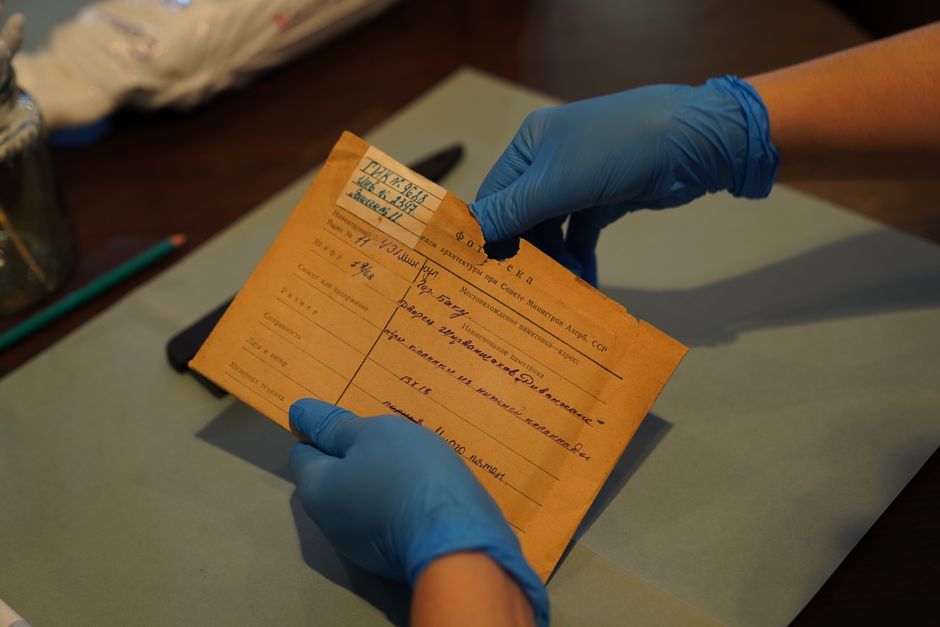
In an era where information flows at unprecedented speeds, the preservation of news archives stands as a critical pillar of historical documentation and cultural memory. News archival preservation ensures that the first drafts of history remain accessible for future generations, researchers, and journalists. These archives serve as invaluable resources for understanding societal evolution, political developments, and cultural shifts. The following twelve facts reveal the fascinating world of news archival preservation and its essential role in maintaining our collective memory.

1. News Archives Date Back Centuries

The practice of preserving news predates modern technology by hundreds of years. The earliest newspaper archives began forming in the 17th century when printed newspapers first emerged in Europe. Libraries and institutions recognized the historical value of these publications immediately, establishing systematic collection methods that would evolve over the following centuries. These early efforts laid the groundwork for contemporary archival practices.

2. Microfilm Saved Millions of Pages

Before digital technology revolutionized archival preservation, microfilm became the standard preservation method in the mid-20th century. This technology allowed institutions to photograph newspaper pages at reduced sizes, storing vast amounts of information in compact spaces. Libraries worldwide still maintain extensive microfilm collections, with some archives containing over a century's worth of publications. Despite digital advances, microfilm remains a trusted preservation medium due to its longevity and stability.

3. Newsprint Deteriorates Rapidly

One of the greatest challenges in news archival preservation is the fragile nature of newsprint itself. Traditional newspaper paper contains high levels of acid, which causes yellowing, brittleness, and eventual disintegration. Most newspapers printed after the mid-1800s are at risk of crumbling within 50 to 100 years without proper preservation efforts. This deterioration has created urgency in digitization projects worldwide, racing against time to capture content before physical copies become unusable.

4. Digital Archives Face Unique Challenges

While digital preservation offers accessibility and space-saving advantages, it presents distinct challenges. Digital formats become obsolete, requiring regular migration to current systems. File corruption, technological dependencies, and the need for continuous investment in infrastructure pose ongoing concerns. Additionally, born-digital news content, such as interactive features and multimedia elements, requires specialized preservation techniques that go beyond simple text and image storage.

5. The Library of Congress Holds Massive Collections

The Library of Congress maintains one of the world's largest news archives, with newspapers dating from the early 1700s to the present. Their Chronicling America project has digitized millions of newspaper pages, making them freely accessible online. This institution serves as a model for national archival efforts, demonstrating the importance of government support in preserving journalistic heritage for public access and scholarly research.

6. Copyright Laws Complicate Preservation

News archival preservation operates within complex copyright frameworks. While older newspapers enter the public domain, recent publications remain protected by intellectual property rights. This creates legal obstacles for institutions attempting to digitize and share archived content. Balancing preservation needs with copyright protection requires ongoing negotiation between publishers, libraries, and legal authorities, often resulting in restricted access to certain materials.

7. Climate Control Is Essential

Physical newspaper archives require strict environmental controls to slow deterioration. Temperature must be maintained between 65-70 degrees Fahrenheit, with relative humidity between 30-40 percent. Light exposure must be minimized, as ultraviolet rays accelerate degradation. These stringent requirements make proper archival preservation expensive, requiring specialized facilities and ongoing monitoring to ensure optimal storage conditions.

8. Metadata Makes Archives Searchable

Modern archival preservation extends beyond storing content to making it discoverable. Metadata—information about publication dates, headlines, authors, and subjects—transforms static archives into searchable databases. This cataloging work is labor-intensive, often requiring human expertise to accurately tag and categorize content. Quality metadata determines whether archived materials remain buried or become valuable research tools.

9. Community Newspapers Are Particularly Vulnerable

While major metropolitan newspapers often receive archival attention, small community newspapers face disproportionate preservation challenges. Many local papers lack resources for systematic archiving, and institutional archives may overlook them in favor of larger publications. Yet these community papers contain irreplaceable local history, documenting events and perspectives absent from national coverage. Grassroots preservation efforts and regional historical societies work to fill this gap.

10. Digitization Costs Remain Substantial

Converting physical newspapers to digital formats requires significant financial investment. Professional digitization involves high-resolution scanning, quality control, metadata creation, and ongoing digital storage. Industry estimates suggest digitizing a single newspaper page costs between two to five dollars. For archives containing millions of pages, these costs create budgetary constraints that force institutions to prioritize which materials receive digitization treatment first.

11. International Collaboration Enhances Access

News archival preservation increasingly involves international partnerships. Organizations like the International Federation of Library Associations coordinate global preservation standards and best practices. Cross-border digitization projects share resources and expertise, preventing duplication of efforts while expanding access to international news archives. These collaborations recognize that news preservation serves universal interests in maintaining historical records.

12. Web Archiving Captures Modern Journalism

As journalism migrates online, new archival methods have emerged to capture web-based news. The Internet Archive's Wayback Machine and similar services take periodic snapshots of news websites, preserving content that might otherwise disappear when sites redesign or shut down. However, dynamic content, paywalled articles, and constantly updating pages present technical challenges that continue to evolve with changing web technologies.

Conclusion

These twelve facts illustrate the complex, multifaceted nature of news archival preservation. From battling the chemical deterioration of newsprint to navigating digital obsolescence, archivists work continuously to maintain access to journalism's historical record. This preservation work serves democracy by maintaining accountability records, supports scholarship by providing primary source materials, and honors collective memory by documenting how communities understood their times. As technology and journalism continue evolving, archival preservation must adapt while maintaining its core mission: ensuring that today's news remains tomorrow's accessible history. Understanding these preservation challenges helps society appreciate the invisible infrastructure that safeguards our shared journalistic heritage.

The Hidden Bias in Political Polling Methodology

The Hidden Bias in Political Polling Methodology

⏱️ 6 min read

The Hidden Bias in Political Polling Methodology

Political polling has become an integral part of modern democratic discourse, shaping media narratives, campaign strategies, and public perception of electoral races. Yet beneath the veneer of scientific objectivity lies a complex web of methodological choices that can introduce subtle—and sometimes not-so-subtle—biases into the results. Understanding these hidden biases is essential for both consumers of polling data and those who conduct these surveys.

The Sampling Challenge in Modern Polling

One of the most fundamental sources of bias in political polling stems from sample selection. Traditional probability sampling, long considered the gold standard, has become increasingly difficult to execute in the digital age. The decline of landline telephone usage has forced pollsters to adapt their methodologies, but each adaptation comes with its own set of challenges.

Random digit dialing, once a reliable method for reaching representative samples, now faces response rates that have plummeted to single digits in many cases. This creates a significant problem: those who choose to respond to polls may differ systematically from those who decline. Politically engaged individuals, those with strong opinions, or people with more free time are more likely to participate, potentially skewing results away from the true distribution of opinions in the general population.

The Rise of Online Polling and Its Complications

As response rates for traditional phone polling have declined, many organizations have turned to online panels and internet-based surveys. While these methods offer cost advantages and can reach younger demographics more effectively, they introduce their own biases. Internet access, while widespread, is not universal, and those who volunteer for online polling panels may have distinct characteristics that separate them from the broader population.

Furthermore, online polls face unique challenges in verification. Ensuring that respondents are who they claim to be, preventing multiple responses from the same individual, and confirming that participants are actually eligible voters requires sophisticated technical safeguards that not all polling operations implement equally well.

Weighting and Its Discontents

To compensate for known sampling biases, pollsters employ statistical weighting—adjusting responses to match demographic targets based on census data or other benchmarks. While necessary, this process itself can introduce bias depending on the choices pollsters make.

The variables chosen for weighting matter enormously. Most polls weight by age, gender, race, and education. However, pollsters must decide whether to weight by party identification, past vote history, or other political variables. Each choice carries implications. Weighting by party identification assumes current party affiliations should match recent historical patterns, but this assumption may fail during periods of genuine partisan realignment.

Additionally, when sample deviations from population parameters are large, the weights applied must be correspondingly large. This can result in individual responses being counted multiple times, effectively giving disproportionate influence to small subgroups within the sample and increasing the margin of error beyond what topline figures suggest.

Question Wording and Order Effects

The specific language used in poll questions can dramatically influence results, often in ways that are difficult to detect without careful analysis. Subtle word choices can prime respondents to think about issues in particular ways or can frame questions to favor certain responses.

  • Leading questions that include emotionally charged language or presuppose certain facts
  • Questions that provide incomplete or unbalanced context
  • Double-barreled questions that ask about multiple issues simultaneously
  • Response options that do not adequately capture the range of possible opinions

Question order effects present another layer of complexity. Earlier questions can influence how respondents think about later ones, a phenomenon known as priming. A poll that asks about healthcare costs before asking about government spending may yield different results than one that reverses the order, as the first question activates certain considerations in respondents' minds.

The Likely Voter Problem

Perhaps no methodological choice is more consequential—or more prone to bias—than determining which respondents are "likely voters." Since general population opinions often differ from those of actual voters, polls that fail to screen effectively can produce misleading results.

Different polling organizations use different likely voter models, ranging from simple self-reporting ("How likely are you to vote?") to complex algorithms incorporating past voting history, political engagement, and demographic factors. Each model embeds assumptions about electoral dynamics that may or may not prove accurate.

These models can also create self-fulfilling prophecies. If polls suggesting one candidate is far ahead cause that candidate's supporters to become complacent and stay home, the initial polling may have helped create the very outcome it was meant to predict. Conversely, likely voter screens applied too stringently in the months before an election may miss late-breaking shifts in turnout patterns.

Timing and the Snapshot Fallacy

Polls represent snapshots of opinion at specific moments in time, yet they are often interpreted as predictions or stable measurements. Public opinion on political matters can be remarkably fluid, shifting in response to news events, campaign developments, or evolving information. The timing of when a poll is conducted—relative to debates, scandals, or other major events—can significantly impact results in ways that have nothing to do with the underlying race dynamics.

Moreover, the time required to conduct a poll means that even a single survey may capture opinions across several days during which circumstances changed. A three-day tracking poll conducted during a period of major news may effectively be measuring different electorates at different points.

Transparency and Accountability

Not all polling organizations disclose their methodologies with equal thoroughness. Response rates, weighting procedures, question wording, and sample composition should all be readily available for scrutiny, yet some pollsters provide only minimal methodological information. This lack of transparency makes it difficult to assess the potential for bias or to compare results across different surveys.

The proliferation of partisan polling—surveys conducted explicitly to advance particular political narratives—has further complicated the landscape. While not inherently invalid, such polls may employ methodological choices designed to produce favorable results, from strategic question wording to selective release of findings.

Moving Forward

Recognizing these sources of bias does not require rejecting polling altogether. Well-conducted surveys using rigorous methodologies remain valuable tools for understanding public opinion. However, consumers of polling data should approach individual polls with appropriate skepticism, looking for methodological transparency, comparing results across multiple surveys, and understanding that all polls contain uncertainty beyond their stated margins of error.

The polling industry continues to evolve, experimenting with new methodologies and attempting to address known biases. As political polarization intensifies and traditional sampling frames continue to deteriorate, the challenges facing pollsters will only grow more acute. The hidden biases in polling methodology deserve greater attention and more honest public discussion if polls are to maintain their role as legitimate instruments of democratic discourse.