










1 / 10 Questions
0 Points

What State Is Famous For Bourbon Barrels?

Kentucky

Virginia

Tennessee

Missouri

Points won
0
Correct score
0%

More Questions

More Articles

What Quantum Physics Suggests About Reality

What Quantum Physics Suggests About Reality

⏱️ 5 min read

What Quantum Physics Suggests About Reality

Quantum physics has revolutionized our understanding of the universe, challenging fundamental assumptions about the nature of reality itself. Since its development in the early 20th century, quantum mechanics has not only transformed scientific understanding but has also permeated popular culture, inspiring countless films, books, and philosophical discussions. What this field of physics suggests about reality is both fascinating and deeply counterintuitive, forcing us to reconsider what it means for something to exist.

The Fundamental Weirdness of the Quantum World

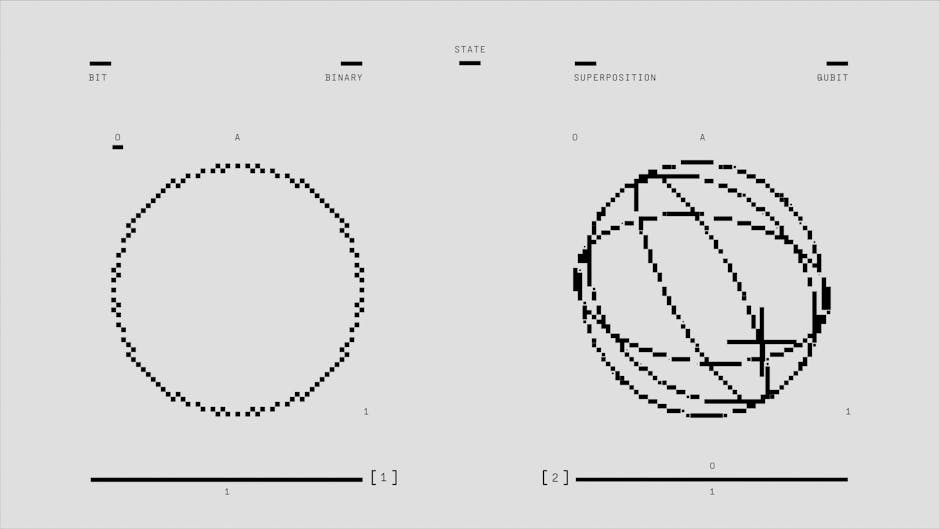
At the quantum level, the universe operates according to rules that seem to defy common sense. Unlike the predictable, deterministic world described by classical physics, quantum mechanics reveals a reality that is fundamentally probabilistic. Particles do not have definite positions or velocities until they are measured; instead, they exist in a state of superposition, occupying multiple states simultaneously until observation collapses these possibilities into a single outcome.

This strange behavior was famously illustrated by Erwin Schrödinger's thought experiment involving a cat in a box. According to quantum mechanics, until the box is opened and observed, the cat exists in a superposition of being both alive and dead simultaneously. While this scenario was intended to highlight the absurdity of applying quantum rules to everyday objects, it effectively demonstrates the bizarre implications of quantum theory for our understanding of reality.

The Observer Effect and the Role of Consciousness

One of the most profound implications of quantum physics is the observer effect, demonstrated most clearly in the famous double-slit experiment. When particles such as electrons are fired at a barrier with two slits, they create an interference pattern on a screen behind the barrier, suggesting they behave as waves passing through both slits simultaneously. However, when scientists attempt to observe which slit the particle passes through, the interference pattern disappears, and the particles behave like discrete objects passing through one slit or the other.

This phenomenon has led to intense debate about the role of observation and consciousness in shaping reality. Some interpretations suggest that the act of measurement or observation literally brings reality into existence, transforming quantum possibilities into concrete outcomes. While this doesn't necessarily mean human consciousness creates reality, it does suggest that reality at the quantum level is intimately connected with the act of observation in ways that classical physics never anticipated.

Multiple Interpretations of Quantum Reality

The scientific community has developed several interpretations to explain what quantum mechanics tells us about reality, each with profound philosophical implications:

The Copenhagen Interpretation

The most widely taught interpretation, developed primarily by Niels Bohr and Werner Heisenberg, suggests that quantum particles exist in superposition until measured. The act of measurement causes the wave function to collapse, selecting one outcome from many possibilities. This interpretation implies that reality at the quantum level is fundamentally indeterminate until observation occurs.

The Many-Worlds Interpretation

Proposed by Hugh Everett III in 1957, this interpretation suggests that all possible outcomes of quantum measurements actually occur, but in separate, branching universes. Rather than wave function collapse, the universe splits into multiple versions of itself with each quantum event. This means that every possible version of history exists in parallel realities, a concept that has captured popular imagination and inspired numerous science fiction narratives.

Pilot Wave Theory

Also known as de Broglie-Bohm theory, this interpretation proposes that particles have definite positions at all times, guided by a quantum wave. This deterministic approach eliminates some of the mystical elements of other interpretations but introduces non-locality, where influences can act instantaneously across vast distances.

Quantum Entanglement and Non-Locality

Perhaps no quantum phenomenon challenges our understanding of reality more than entanglement. When particles become entangled, they form a connected system where the state of one particle instantaneously influences the state of another, regardless of the distance separating them. Einstein famously called this "spooky action at a distance" and was deeply uncomfortable with its implications.

Experimental tests have repeatedly confirmed that entanglement is real, suggesting that reality is non-local. Information about the state of one particle appears to travel faster than light to affect its entangled partner, seemingly violating the cosmic speed limit established by relativity. This doesn't allow for faster-than-light communication, but it does suggest that space and separation may be less fundamental than we once believed.

Implications for Everyday Reality

While quantum effects dominate at microscopic scales, their implications extend to the macroscopic world we experience daily. Quantum mechanics has practical applications in:

  • Modern electronics and computer processors
  • Laser technology and fiber optic communications
  • Medical imaging devices such as MRI machines
  • Emerging quantum computing technologies
  • Cryptography and secure communications

Moreover, some scientists speculate that quantum effects may play roles in biological processes, including photosynthesis, bird navigation, and possibly even consciousness itself, though these ideas remain controversial and actively researched.

The Continuing Mystery

Despite over a century of research and spectacular predictive success, quantum mechanics remains deeply mysterious. The equations work with extraordinary precision, enabling technological innovations that have transformed civilization, yet physicists continue to debate what these equations tell us about the fundamental nature of reality.

What quantum physics ultimately suggests is that reality is far stranger than our everyday experience indicates. The universe at its most fundamental level appears to be probabilistic rather than deterministic, non-local rather than limited by spatial separation, and intimately connected with observation in ways that blur the line between observer and observed. Whether this means reality is created by observation, exists in infinite parallel versions, or operates according to hidden variables we haven't yet discovered remains one of the deepest questions in science.

As quantum technologies advance and our experimental capabilities grow more sophisticated, we may move closer to answering these fundamental questions. Until then, quantum physics continues to challenge our assumptions and remind us that the universe is far more mysterious and wonderful than common sense alone would suggest.

9 Strange But True Facts About the International Date Line

9 Strange But True Facts About the International Date Line

9 Strange But True Facts About the International Date Line

By The Trivia Club, Staff Writer — Published July 28, 2026

Table of Contents

Imagine standing with one foot in today and the other in tomorrow. That's not science fiction—it's a real possibility along one of Earth's most peculiar geographical features. The International Date Line weaves through the Pacific Ocean like a drunken surveyor drew it, creating bizarre time zones, split nations, and calendar chaos that defies logic. This invisible boundary doesn't follow a straight path, and the strange true international oddities it creates have puzzled travelers and islanders for generations. Unlike the Prime Meridian, which earned its zero-degree status through international agreement, the Date Line exists more by necessity than design. When you need the calendar to change somewhere on a spherical planet, things get weird fast. The results are stranger than most people realize.

Key Takeaways

  • The International Date Line zigzags dramatically to avoid splitting countries, deviating over 2,000 miles from the 180th meridian in some places.
  • Kiribati deliberately moved the Date Line in 1995 to unite its islands in the same day, creating the world's easternmost and westernmost points in one nation.
  • You can celebrate the same birthday, anniversary, or New Year twice by crossing the line strategically—a trick cruise ships exploit regularly.
  • Russia and the United States are only 2.4 miles apart at their closest point but are separated by 21 hours due to the Date Line running between them.
  • No international treaty or organization officially controls the Date Line—countries can move it unilaterally within their waters.
  • The line has moved multiple times throughout history, sometimes stranding islands in inconvenient time zones for decades.

Strange True International Boundaries: Where Geography Meets Timekeeping

The International Date Line nominally follows the 180th meridian, directly opposite the Prime Meridian at Greenwich, England. But calling it a "line" is generous. This boundary zigzags wildly across the Pacific, taking sharp turns to accommodate political borders, island nations, and territorial waters. In some spots, it deviates more than 2,000 miles from its theoretical position. Why such chaos? When the concept was formalized in the late 19th century, mapmakers faced an impossible problem: keep island groups and nations unified in time, or maintain geometric purity. They chose practicality. The result resembles a gerrymandered congressional district more than a geographic feature. Russia pushed the line eastward to keep its Far Eastern territories in the same day. Various Pacific islands nudged it westward or eastward to align with trading partners rather than geographic neighbors. No single authority controls this boundary. Unlike international borders requiring treaties, the Date Line exists through mutual agreement and custom. Countries with Pacific territories can—and do—move it unilaterally within their waters, creating surprising anomalies that catch even experienced travelers off guard.

The Nine Most Surprising Curiosities

1. Kiribati Occupies Both the Furthest East and Furthest West Points on Earth Simultaneously

The island nation of Kiribati performed a temporal magic trick in 1995. Spread across 1.3 million square miles of ocean, its islands straddled the Date Line, meaning half the country lived a day ahead of the other half. This made governance, commerce, and even family phone calls nightmarish. The government's solution? Move the Date Line eastward in a massive bulge, bringing all islands into the same calendar day. Now Kiribati's easternmost islands, including Caroline Island (renamed Millennium Island), greet each new day before anywhere else on Earth, while its westernmost atolls technically occupy the furthest west position. Same country, both extremes.

2. You Can Walk Between Yesterday and Tomorrow in Under a Minute

Several Pacific islands sit so close to the Date Line that you can physically experience two calendar days within walking distance. On some atolls in Kiribati and Tuvalu, the line once passed directly through inhabited areas. Residents could literally step from Saturday into Sunday, then back again. While most of these oddities were eliminated by Date Line adjustments, the theoretical possibility remains: stand at the right spot, and your left foot exists in a different day than your right foot. No time machine required—just peculiar geography and human timekeeping conventions colliding.

3. Russia and Alaska Are Separated by 21 Hours Despite Being 2.4 Miles Apart

Big Diomede Island (Russia) and Little Diomede Island (Alaska) sit in the Bering Strait just 2.4 miles apart. The International Date Line runs directly between them, creating the largest time difference possible between neighboring territories. When it's noon Saturday on Little Diomede, it's 9 AM Sunday on Big Diomede. Locals call them "Tomorrow Island" and "Yesterday Island." During the Cold War, this temporal gap symbolized the divide between superpowers—you could literally see tomorrow from yesterday, but couldn't visit. The indigenous Iñupiat people, who traditionally moved freely between the islands, found themselves separated not just by politics but by calendar days.

4. Samoa Jumped Forward an Entire Day to Boost Its Economy

On December 29, 2011, Samoa did something unprecedented: it erased December 30 from existence. The nation skipped directly from Thursday, December 29, to Saturday, December 31. Why commit calendar suicide? Economics. Samoa had aligned itself with the United States in 1892, placing it east of the Date Line. But by 2011, most trade had shifted to Australia and New Zealand. Being nearly a day behind its major trading partners meant businesses lost productivity—Friday in Sydney was still Thursday in Samoa. By jumping west across the Date Line, Samoa gained a full working day of overlap with its Pacific Rim partners. The cost? One lost Friday and considerable confusion about whether people aged an extra day or skipped one entirely.

5. Airlines Fly Flights That Arrive Before They Depart

Cross the Date Line eastward, and you travel backward in time—on the calendar, at least. Several Pacific routes create temporal paradoxes. Flights from Auckland to Honolulu routinely land "before" they take off. A plane departing Auckland at 9 PM Thursday arrives in Honolulu at 9 AM Thursday morning, despite the flight taking roughly nine hours. Passengers experience every minute of the journey, but the calendar insists they time-traveled. The reverse creates marathon calendar days: westbound travelers from Los Angeles to Sydney can experience a single "day" lasting 30+ hours. Your body knows better, but your watch disagrees.

6. The Line Has No Legal Status Under International Law

Here's a strange truth: no treaty, convention, or international body officially defines or controls the International Date Line. It exists through practical consensus, not legal framework. The International Telecommunication Union and various mapping organizations recognize it, but countries can move it within their territorial waters without permission. This has led to unilateral changes throughout history. When Kiribati moved the line in 1995, it didn't consult anyone—it simply announced the change. The lack of legal status means the Date Line is more social construct than geographic reality, a shared agreement that works because everyone pretends it's official.

7. Some Islands Changed Days Multiple Times Throughout History

Several Pacific islands have ping-ponged across the Date Line, changing calendar days multiple times as colonial powers and economic interests shifted. The Philippines originally aligned with Asian time zones, then switched to match American interests after 1898, then switched back. Various Aleutian Islands changed days when the United States purchased Alaska from Russia in 1867—suddenly October 6 was followed by October 18 as the calendar adjusted. These changes created genealogical nightmares: birth and death records sometimes show people born "after" their siblings or dying "before" their last birthday, depending on which calendar system was in effect.

8. Cruise Ships Exploit the Date Line for Extended Celebrations

Savvy cruise lines have discovered a profitable trick: cross the Date Line slowly during major holidays. New Year's Eve cruises in the Pacific can celebrate midnight twice by sailing eastward across the line at just the right speed. Passengers ring in the new year once, sail into "yesterday," then celebrate again. Some ships even cross back and forth multiple times, creating three or four New Year's celebrations in a single voyage. The same strategy works for birthdays, anniversaries, and other milestone events. It's not time travel, but the calendar cooperates enough to feel magical—and passengers pay premium prices for the experience.

9. The Date Line Creates the World's Largest Single-Hour Time Zone Jump

Most time zones differ by one hour. Cross from New York to Chicago, lose an hour. Simple. But cross the International Date Line, and you jump 23-25 hours depending on location—the largest temporal leap possible on Earth. The Line of Islands in Kiribati (UTC+14) and Baker Island (UTC-12) are separated by 26 hours despite being relatively close geographically. This creates mind-bending scenarios: it can be 3 PM Tuesday in one location and 5 PM Wednesday just a few hundred miles away. The human brain isn't wired for this kind of temporal gymnastics, which explains why Date Line jet lag feels particularly disorienting compared to ordinary time zone changes.

Common Misconceptions About This Temporal Boundary

Many people assume the International Date Line follows the 180th meridian precisely. It doesn't. The actual line deviates dramatically, creating a jagged path that would make a geometry teacher weep. Another common myth suggests that crossing the line is always disorienting or causes special jet lag. The physiological effects of crossing the Date Line are identical to crossing any other time zone—your body responds to actual time changes, not calendar dates. The confusion is psychological, not biological. Some travelers believe you "lose" or "gain" a day permanently when crossing. You don't. Cross westward and skip a calendar day, but cross back eastward and you experience that "day" again. The total hours lived remain unchanged. The calendar is a human invention; the Date Line simply represents where we agreed that invention needs to reset.

How This Invisible Line Affects Daily Life

For most people, the International Date Line is theoretical—a map curiosity with no practical impact. But for Pacific islanders, airline crews, and international businesses, it's a daily consideration. Families split across the line coordinate phone calls carefully: calling Mom on her birthday requires checking whether it's actually her birthday where she is. Businesses with operations on both sides schedule meetings in narrow windows when both locations share a workday. The line also affects data systems and computer networks. Programmers building global applications must account for the Date Line's irregular path, or risk scheduling conflicts and data errors. Financial markets, which operate on precise timestamps, require sophisticated systems to handle transactions that might cross the line multiple times in complex trading chains.
Location Pair Distance Apart Time Difference
Big Diomede (Russia) & Little Diomede (Alaska) 2.4 miles 21 hours
Line Islands (Kiribati) & Baker Island (U.S.) ~1,500 miles 26 hours
Samoa & American Samoa ~60 miles 24 hours
Tonga & Niue ~300 miles 24 hours

Frequently Asked Questions

What happens if you're born exactly on the International Date Line?

Births at sea near the Date Line are recorded using the ship's official time zone, which is set by the vessel's flag country. If somehow born precisely on the line, the birth certificate would use the time zone the ship or aircraft declares, making the "official" birthday a matter of paperwork rather than geography.

Can countries move the International Date Line wherever they want?

Within their own territorial waters (12 nautical miles from shore) and exclusive economic zones (up to 200 nautical miles), countries have complete authority to determine which side of the Date Line they observe. No international permission is required, though dramatic changes might cause diplomatic complications with neighbors and trading partners.

Why doesn't the Date Line go through any major continents?

The 180th meridian, which the Date Line roughly follows, passes almost entirely through the Pacific Ocean by fortunate coincidence. The only significant land it approaches is far eastern Russia, and the line was deliberately shifted westward to avoid splitting the country, keeping all Russian territory in the same calendar day.

Do ships and planes change their clocks when crossing the Date Line?

Yes, but the timing varies. Ships often adjust clocks at midnight to minimize disruption, while airlines typically change at a convenient point during the flight. Passengers might wake up to discover they're repeating yesterday or have jumped to tomorrow, depending on direction of travel. The International Date Line remains one of humanity's strangest geographic compromises—an invisible boundary that bends to politics, economics, and convenience rather than following any natural law. Every zigzag tells a story of nations choosing practicality over mathematical purity, and the result is a timeline as messy and fascinating as human civilization itself.