

Points won
0
Correct score
0%

More Questions

More Articles

Why Political Hope Requires Realistic Expectations

Why Political Hope Requires Realistic Expectations

⏱️ 5 min read

Why Political Hope Requires Realistic Expectations

Political hope is an essential element of democratic engagement, driving citizens to participate in elections, support causes, and advocate for change. However, when hope becomes detached from reality, it can lead to disillusionment, cynicism, and withdrawal from civic life. The relationship between hope and expectations in politics represents a delicate balance that shapes not only individual satisfaction with governance but also the health of democratic institutions themselves.

The Psychology of Political Hope and Disappointment

Political campaigns often trade in elevated rhetoric and transformative promises. This approach reflects an understanding of human psychology: people are more likely to engage with inspiring visions than with incremental improvements. Yet this dynamic creates a fundamental tension between what candidates promise and what governmental systems can realistically deliver.

Research in political psychology demonstrates that when voters hold unrealistic expectations about what elected officials can accomplish, they experience sharper disappointments when those expectations inevitably go unmet. This cycle of hope and disillusionment doesn't just affect individual voters; it erodes trust in democratic institutions more broadly. When citizens believe that government should solve complex problems quickly and completely, they may conclude that democracy itself is failing when progress proves slow or incomplete.

Structural Constraints on Political Change

Understanding why realistic expectations matter requires examining the structural realities that constrain political action. Democratic systems, particularly those with separation of powers and checks and balances, are designed to prevent rapid, sweeping changes. While this design protects against authoritarianism, it also means that even popular reforms face numerous obstacles.

Key structural constraints include:

  • Legislative gridlock requiring coalition-building and compromise
  • Judicial review that can limit or overturn policy initiatives
  • Federal systems where power is distributed across multiple levels of government
  • Bureaucratic processes that slow implementation of new policies
  • Budget limitations that restrict the scope of possible interventions
  • International dependencies that limit unilateral action

These constraints aren't bugs in the system; they're features designed to ensure deliberation, protect minority rights, and prevent hasty decisions. However, they create a significant gap between campaign promises and governing realities.

The Danger of Unrealistic Expectations

When political hope becomes untethered from realistic expectations, several negative consequences emerge. First, voters may become increasingly cynical about all political actors, assuming that unmet promises represent personal failures or deliberate deception rather than systemic constraints. This cynicism can manifest as decreased voter turnout, reduced civic engagement, and growing support for anti-establishment candidates who promise to bypass normal democratic processes.

Second, unrealistic expectations can fuel political extremism. When voters believe that conventional politics cannot address their concerns because previous leaders "didn't try hard enough," they may gravitate toward candidates promising radical solutions without acknowledging the complications involved in implementation. This dynamic has contributed to polarization in many democracies, as frustrated voters on both ends of the political spectrum reject incremental approaches in favor of transformative rhetoric.

Third, the disappointment cycle can create a self-fulfilling prophecy. When engaged citizens become disillusioned and withdraw from political participation, the resulting vacuum makes it harder for reform-minded leaders to build the coalitions necessary for change. The most cynical voices then dominate public discourse, further discouraging participation and perpetuating dysfunction.

Cultivating Realistic Political Hope

The solution is not to abandon political hope but to ground it in realistic understanding of how democratic change occurs. This approach acknowledges that meaningful progress is possible while recognizing that such progress typically requires sustained effort, strategic compromise, and incremental advancement.

Realistic political hope involves several key elements:

  • Understanding that significant policy changes often take years or decades to achieve
  • Recognizing that compromise is not betrayal but a necessary feature of diverse democracies
  • Appreciating that partial victories can lay groundwork for future progress
  • Acknowledging that setbacks are normal parts of long-term reform efforts
  • Evaluating leaders based on their efforts and achievements within systemic constraints rather than against idealized standards

The Role of Political Education

Fostering realistic expectations requires better civic education about how government actually functions. Many citizens have limited understanding of legislative processes, judicial review, regulatory implementation, and international constraints on domestic policy. Without this knowledge, voters may reasonably but incorrectly assume that elected officials have more power than they actually possess.

Media coverage also plays a crucial role. Horse-race journalism that focuses on campaign promises without examining feasibility, or that treats all political statements as equally realistic or unrealistic, fails to help voters develop accurate expectations. More responsible coverage would include analysis of structural barriers, examination of historical precedents, and frank assessment of what proposed policies could realistically achieve.

Hope as Sustained Engagement

Ultimately, political hope grounded in realistic expectations transforms from a passive wish for salvation through elections into an active commitment to sustained engagement. This mature form of hope recognizes that democratic change requires ongoing participation, not just periodic voting. It understands that building political power for long-term reform involves organizing, coalition-building, and persistence through setbacks.

This realistic hope is more durable than its idealistic counterpart precisely because it anticipates obstacles and disappointments. Rather than creating a binary of success or failure, it measures progress in degrees and maintains engagement through temporary defeats. In doing so, it protects both individual mental health and collective democratic vitality.

Democratic societies need political hope to function, but that hope must be tempered by realistic understanding of how change occurs within complex systems. Only then can citizens maintain the sustained engagement necessary for meaningful progress while protecting themselves and their institutions from the corrosive effects of repeated disillusionment. The goal is not to lower aspirations but to align them with the patient, persistent work that democratic change requires.
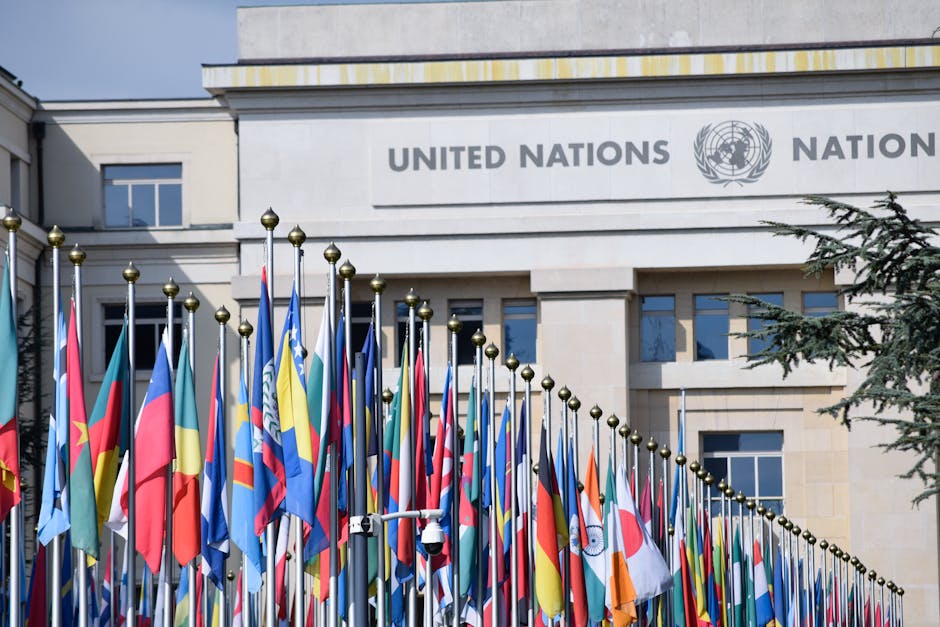
Did You Know? 8 Facts About Diplomatic Precedent in Treaty Interpretation

Did You Know? 8 Facts About Diplomatic Precedent in Treaty Interpretation

⏱️ 6 min read

Did You Know? 8 Facts About Diplomatic Precedent in Treaty Interpretation

Treaty interpretation stands as one of the most critical yet often misunderstood aspects of international law and diplomacy. When nations enter into agreements, the language used must be precise, yet disputes inevitably arise over what specific provisions mean. This is where diplomatic precedent plays a vital role, providing a framework for understanding and applying treaty language based on historical practice and established norms. The following eight facts illuminate how diplomatic precedent shapes the interpretation of treaties and influences international relations in profound ways.

1. The Vienna Convention Establishes the Foundation

The 1969 Vienna Convention on the Law of Treaties serves as the primary codification of rules governing treaty interpretation. Article 31 establishes that treaties must be interpreted "in good faith in accordance with the ordinary meaning to be given to the terms of the treaty in their context and in the light of its object and purpose." This principle reflects centuries of diplomatic precedent, consolidating customary practices into a single authoritative framework. The Convention, ratified by over 116 countries, demonstrates how diplomatic precedent evolves from practice into binding law. Importantly, the Vienna Convention itself relies heavily on previous state practice and judicial decisions, making it a meta-example of how precedent functions in treaty interpretation.

2. Subsequent Practice Can Override Original Intent

One of the most fascinating aspects of diplomatic precedent is that how parties actually implement a treaty can become more important than what negotiators originally intended. Article 31(3)(b) of the Vienna Convention recognizes "subsequent practice in the application of the treaty which establishes the agreement of the parties regarding its interpretation." This means that if all parties to a treaty consistently interpret and apply a provision in a particular way over time, that interpretation gains legal weight regardless of what the drafters might have meant. This principle acknowledges the living nature of international agreements and the importance of practical diplomatic experience in shaping legal meaning.

3. The Role of Preparatory Work Is Limited but Significant

Diplomatic precedent has established that preparatory work—the negotiations, drafts, and discussions leading to a treaty—should generally be considered only as supplementary means of interpretation. Article 32 of the Vienna Convention permits recourse to preparatory work when the primary interpretation methods leave meaning ambiguous or lead to manifestly absurd results. This limitation reflects a long-standing diplomatic practice prioritizing the final text over negotiating history. However, when preparatory work is consulted, it can provide crucial insights into contentious provisions, especially in cases where the treaty language resulted from compromise between competing interests.

4. Judicial Decisions Create Interpretive Precedents

International courts and tribunals, particularly the International Court of Justice (ICJ), have developed substantial bodies of precedent regarding treaty interpretation. While international law technically does not operate under a strict doctrine of stare decisis (binding precedent), ICJ decisions carry enormous persuasive weight in diplomatic circles. Cases such as the Territorial Dispute (Libya v. Chad) and the Kasikili/Sedudu Island case have established interpretive principles that diplomats and legal advisers routinely cite when analyzing treaty obligations. These judicial precedents effectively guide how nations approach treaty interpretation in their diplomatic practice, creating a feedback loop between courts and diplomacy.

5. Language Authenticity Affects Interpretation

Diplomatic precedent has developed specific rules for interpreting multilingual treaties, a common feature of international agreements. When a treaty exists in multiple languages, all equally authentic, precedent establishes that each version should be presumed to have the same meaning. However, when differences arise between language versions, interpreters must seek the meaning most consistent with the treaty's object and purpose. This precedent reflects the practical realities of multilingual diplomacy while acknowledging that translation imperfections are inevitable. Historic cases involving French, English, Spanish, and other treaty languages have created a rich body of interpretive guidance that continues to shape modern diplomatic practice.

6. Special Meanings and Technical Terms Require Contextual Analysis

Diplomatic precedent recognizes that terms in treaties may carry special meanings different from their ordinary usage. Article 31(4) of the Vienna Convention states that "a special meaning shall be given to a term if it is established that the parties so intended." This principle has deep roots in diplomatic practice, where technical terms in areas such as trade, maritime law, or human rights may have evolved specific meanings within particular communities. Precedent has established that interpreters must carefully examine the context and specialized usage within relevant fields, consulting expert opinions and historical practice in those domains to determine the appropriate meaning.

7. The Principle of Effectiveness Prevents Hollow Obligations

A long-standing diplomatic precedent holds that treaties should be interpreted to give effect to all their provisions rather than rendering them meaningless. Known as the principle of effectiveness or "ut res magis valeat quam pereat" (it is better for a thing to have effect than to be void), this interpretive approach ensures that treaty obligations retain substance. International courts have repeatedly applied this principle, and it has become deeply embedded in diplomatic practice. When faced with multiple possible interpretations, diplomats and legal advisers are guided by precedent to choose the reading that makes treaty provisions operational and meaningful rather than redundant or ineffective.

8. Reservations and Declarations Shape Treaty Application

Diplomatic precedent has established complex rules regarding how reservations and interpretive declarations affect treaty interpretation. When a state ratifies a treaty with reservations—formal statements excluding or modifying certain provisions—these reservations become part of the interpretive context for that state's obligations. Precedent distinguishes between valid reservations that modify treaty obligations and interpretive declarations that merely clarify a state's understanding without changing obligations. The interplay between reservations and treaty interpretation has generated substantial precedent, particularly regarding human rights treaties where states frequently attach reservations. This body of practice guides diplomats in both formulating and responding to reservations, shaping how treaties function in practice.

Conclusion

These eight facts demonstrate that diplomatic precedent in treaty interpretation is far more than an academic exercise—it represents the accumulated wisdom of international legal practice and shapes how nations interact on the global stage. From the foundational principles codified in the Vienna Convention to the nuanced rules governing multilingual texts and reservations, precedent provides essential guidance for diplomats, legal advisers, and international courts. Understanding these precedents enables more effective participation in international relations and helps prevent disputes by providing common interpretive frameworks. As international law continues to evolve, these precedents will undoubtedly be supplemented by new practices, but the fundamental principles they embody will remain central to treaty interpretation for generations to come.