










1 / 10 Questions
0 Points

What TV show featured Lucy and Ricky Ricardo?

The Honeymooners

The Dick Van Dyke Show

I Love Lucy

Leave It to Beaver

Points won
0
Correct score
0%

More Questions

More Articles

The Danger of Treating Democracy as a Spectator Sport

The Danger of Treating Democracy as a Spectator Sport

⏱️ 5 min read

The Danger of Treating Democracy as a Spectator Sport

In modern democratic societies, a troubling trend has emerged: citizens increasingly view democracy as something to observe rather than participate in. This passive approach, where individuals watch political developments unfold from the sidelines much like spectators at a sporting event, poses significant risks to the health and sustainability of democratic institutions. When citizens disengage from active participation and treat governance as entertainment, the very foundations of representative democracy begin to erode.

The Rise of Democratic Spectatorship

The phenomenon of democratic spectatorship manifests in multiple ways across contemporary societies. Many citizens limit their political engagement to watching news coverage, following social media commentary, and discussing political events with like-minded individuals, all while rarely taking concrete action. This passive consumption of politics creates an illusion of engagement without the substance of meaningful participation.

Several factors have contributed to this shift. The 24-hour news cycle has transformed politics into constant entertainment, with media outlets focusing on conflict, scandal, and personality-driven narratives rather than substantive policy discussions. Political coverage often resembles sports commentary, complete with winners and losers, polls functioning as scoreboards, and elections treated as championship events. This framing encourages audiences to pick sides and cheer from afar rather than recognize their role as essential participants in the democratic process.

Consequences of Passive Citizenship

When democracy becomes a spectator sport, the consequences extend far beyond individual disengagement. The quality of democratic governance itself suffers in measurable ways.

First, voter turnout declines. While voting represents the most basic form of democratic participation, many established democracies struggle with consistently low voter participation rates. When citizens view themselves as observers rather than participants, they often conclude that their individual vote carries little weight. This self-fulfilling prophecy weakens electoral legitimacy and allows small, motivated minorities to exert disproportionate influence over election outcomes.

Second, the space between elections becomes a democratic void. Representative democracy requires more than periodic voting; it depends on sustained citizen engagement through multiple channels. When people treat politics as a spectator sport, they often pay attention only during election seasons, leaving elected officials largely unaccountable during their terms in office. This creates opportunities for special interests and well-organized lobbying groups to dominate policy-making processes without public scrutiny.

Third, the quality of public discourse deteriorates. Spectator democracy encourages tribalism, where citizens identify with political parties or movements as fans identify with sports teams—through loyalty rather than critical evaluation. This tribal mentality fosters polarization, makes compromise difficult, and reduces complex policy questions to simplified narratives of good versus evil.

The Erosion of Democratic Skills

Active democratic citizenship requires specific skills and habits that atrophy when unused. These include:

  • Critical thinking and the ability to evaluate competing claims and evidence
  • Civil discourse and the capacity to engage respectfully with those holding different views
  • Collaborative problem-solving and willingness to seek common ground
  • Civic knowledge about governmental structures, processes, and history
  • Organizational abilities needed for collective action and community engagement

When citizens adopt a spectator mindset, they have fewer opportunities to develop and practice these essential democratic competencies. Over time, entire generations may grow up without acquiring the skills necessary for effective self-governance, creating a vicious cycle where passive citizenship becomes increasingly normalized.

The Accountability Gap

Democratic accountability depends on active citizen oversight. Elected representatives and government institutions function properly only when they know citizens are paying attention and will respond to failures or overreach. Spectator democracy creates an accountability gap where officials face minimal consequences for poor performance, corruption, or neglect of public interest.

This gap becomes particularly dangerous when combined with complex policy challenges requiring sustained public attention. Issues like climate change, infrastructure investment, healthcare reform, and economic inequality demand long-term commitment and difficult trade-offs. When citizens engage only sporadically and superficially, politicians have incentives to prioritize short-term gains and avoid politically costly but necessary actions.

Reclaiming Active Citizenship

Reversing the trend toward spectator democracy requires deliberate effort at individual, community, and institutional levels. Citizens must recognize that democracy is not a spectator sport but a participatory system requiring ongoing engagement.

Practical steps toward more active citizenship include:

  • Participating in local government meetings and community organizations
  • Contacting elected representatives about specific issues and policies
  • Engaging in volunteer work that addresses community needs
  • Supporting journalism and information sources that provide substantive coverage
  • Voting consistently in all elections, including local and primary contests
  • Joining or supporting advocacy organizations aligned with personal values
  • Participating in public consultations and comment periods on proposed policies

The Stakes for Democratic Futures

The danger of treating democracy as a spectator sport extends beyond immediate political outcomes. It threatens the long-term viability of democratic systems themselves. History demonstrates that democracies do not collapse primarily through dramatic coups or revolutions; they more often deteriorate gradually through citizen disengagement and institutional decay.

When people abdicate their responsibilities as active citizens, they create vacuums that others will fill—whether special interests, demagogues, or anti-democratic movements. The preservation of democratic governance requires each generation to actively embrace and practice citizenship, understanding that democracy is not a static achievement but an ongoing project requiring constant participation and vigilance.

The choice between spectator and participant citizenship ultimately determines whether democratic societies can address their most pressing challenges while maintaining legitimacy, accountability, and genuine representation. Democracy cannot survive as a spectator sport; it demands active players committed to the difficult work of self-governance.
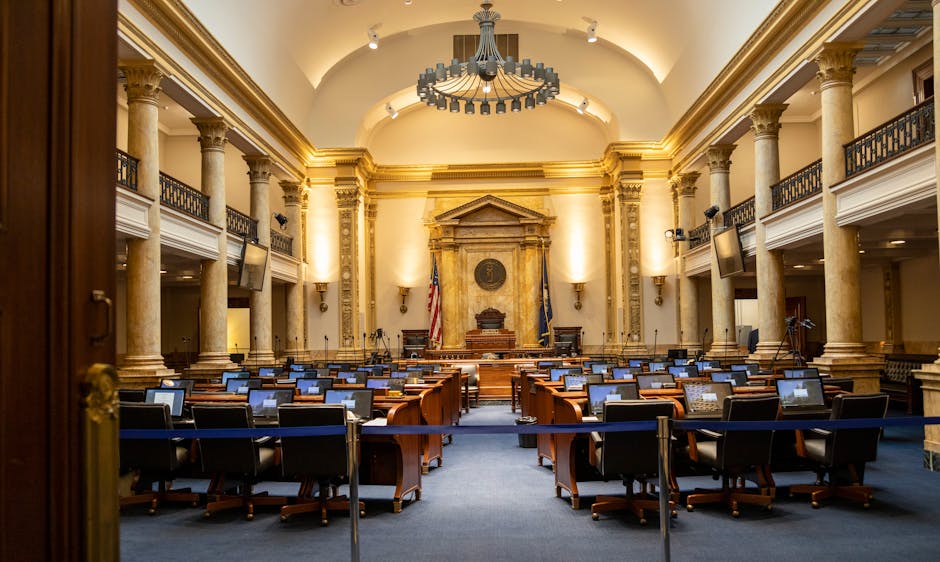
Top 10 Senators with Highest Legislative Productivity

Top 10 Senators with Highest Legislative Productivity

⏱️ 6 min read

Top 10 Senators with Highest Legislative Productivity

Legislative productivity serves as a crucial metric for evaluating the effectiveness of United States Senators in fulfilling their constitutional duties. While the quality of legislation often matters more than quantity, examining senators who consistently introduce, sponsor, and shepherd bills through the complex legislative process provides valuable insights into congressional effectiveness. This analysis explores ten senators who have distinguished themselves through remarkable legislative productivity, demonstrating not only their commitment to addressing national concerns but also their ability to navigate the intricate mechanisms of lawmaking in the upper chamber of Congress.

1. John Cornyn (R-Texas)

Senator John Cornyn has established himself as one of the most legislatively productive members of the Senate. Serving since 2002, Cornyn has sponsored and co-sponsored hundreds of bills across diverse policy areas. His legislative achievements include significant work on criminal justice reform, veterans' affairs, and border security. Cornyn's ability to work across party lines has resulted in numerous bills becoming law, including the First Step Act, a landmark criminal justice reform bill that received bipartisan support. His strategic positioning on key committees and his willingness to engage in lengthy negotiations have made him a consistent legislative producer.

2. Susan Collins (R-Maine)

Senator Susan Collins has built a reputation as one of the Senate's most productive legislators through her moderate approach and willingness to forge bipartisan coalitions. Since joining the Senate in 1997, Collins has sponsored or co-sponsored thousands of legislative measures. Her productivity stems from her focus on practical solutions to pressing issues, including healthcare, homeland security, and economic development. Collins has successfully steered major legislation through the Senate, including measures related to small business support and pandemic relief, demonstrating her ability to find common ground even in highly polarized times.

3. Sherrod Brown (D-Ohio)

Representing Ohio since 2007, Senator Sherrod Brown has proven to be a highly productive legislator with a particular focus on economic issues affecting working families. Brown's legislative portfolio includes extensive work on trade policy, financial regulation, and veterans' benefits. He has successfully championed numerous bills addressing manufacturing job protection, pension security, and consumer protection. Brown's productivity is characterized by his persistent advocacy for his constituents' interests and his ability to build coalitions around economic fairness issues that resonate across political lines.

4. James Inhofe (R-Oklahoma)

During his tenure from 1994 to 2023, Senator James Inhofe demonstrated exceptional legislative productivity, particularly in areas related to defense, infrastructure, and environmental policy. As former chairman of the Senate Armed Services Committee and Environment and Public Works Committee, Inhofe guided numerous major bills through the Senate, including multiple National Defense Authorization Acts and significant infrastructure legislation. His productivity was marked by his command of complex policy areas and his ability to marshal support for large-scale legislative initiatives.

5. Amy Klobuchar (D-Minnesota)

Senator Amy Klobuchar has distinguished herself as one of the Senate's most prolific legislators since her election in 2006. Her productivity is reflected in the dozens of bills she has successfully guided into law, covering areas such as agriculture, antitrust enforcement, and consumer protection. Klobuchar's legislative success rate is particularly notable in an era of partisan gridlock. She has demonstrated an ability to identify achievable policy goals and build the necessary coalitions to advance them, making her one of the most effective lawmakers in recent Senate history.

6. Rob Portman (R-Ohio)

Throughout his Senate service from 2011 to 2023, Senator Rob Portman established himself as a highly productive legislator with expertise in trade, finance, and national security. Portman's legislative achievements include significant contributions to infrastructure development, opioid crisis response, and retirement security. His bipartisan Infrastructure Investment and Jobs Act stands as a testament to his ability to negotiate complex agreements and deliver substantial legislation. Portman's productivity stemmed from his policy expertise, collaborative approach, and willingness to invest time in building consensus.

7. Dick Durbin (D-Illinois)

As the Senate Majority Whip and a senator since 1997, Dick Durbin has maintained consistently high legislative productivity across multiple Congresses. His legislative portfolio spans immigration reform, criminal justice, consumer protection, and civil rights. Durbin has successfully sponsored or co-sponsored thousands of bills and resolutions, with particular success in areas related to judiciary matters and human rights. His leadership position has enhanced his ability to advance legislation, but his productivity also reflects his deep engagement with policy development and his skill in building legislative coalitions.

8. Lindsey Graham (R-South Carolina)

Senator Lindsey Graham has proven to be one of the Senate's most active legislators since joining the chamber in 2003. His legislative productivity spans national security, foreign relations, immigration, and judiciary matters. Graham has introduced hundreds of bills and resolutions while playing key roles in major legislative initiatives. His positions on the Armed Services and Judiciary Committees have positioned him to influence significant legislation. Graham's productivity reflects his willingness to engage on controversial issues and his ability to work with colleagues from both parties on matters of national importance.

9. Mark Warner (D-Virginia)

Since entering the Senate in 2009, Senator Mark Warner has established himself as a highly productive legislator with particular expertise in technology, intelligence, and financial services. Warner has sponsored or co-sponsored extensive legislation addressing cybersecurity, data privacy, and national security. His business background and bipartisan approach have enabled him to advance complex legislative initiatives in areas where technical expertise is essential. Warner's productivity is characterized by his focus on forward-looking policy challenges and his ability to bring together diverse stakeholders around emerging issues.

10. Jeanne Shaheen (D-New Hampshire)

Senator Jeanne Shaheen has demonstrated remarkable legislative productivity since joining the Senate in 2009, with particular focus on foreign relations, energy policy, and small business development. Shaheen has successfully navigated numerous bills through the Senate, including significant measures related to energy efficiency, women's economic empowerment, and international security cooperation. Her productivity reflects her collaborative leadership style and her ability to identify legislative opportunities that can achieve bipartisan support. Shaheen's work on the Foreign Relations and Armed Services Committees has enhanced her legislative effectiveness and impact.

Conclusion

These ten senators represent different states, political parties, and policy priorities, yet they share common characteristics that contribute to their exceptional legislative productivity. Their success stems from deep policy expertise, strategic committee positions, collaborative approaches to lawmaking, and persistent dedication to addressing constituent needs and national challenges. While measuring legislative productivity involves more than simply counting bills introduced or passed, these senators have demonstrated both quantity and quality in their legislative output. Their productivity serves as a reminder that effective governance requires not only strong principles but also the practical skills necessary to transform ideas into law. As the Senate continues to face complex challenges, the examples set by these highly productive legislators provide valuable lessons in effective legislative leadership and the art of building consensus in a divided political environment.